
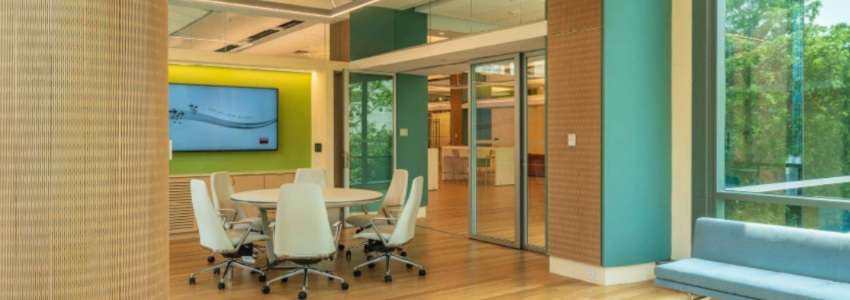
How to eliminate echo in a meeting room
Meeting rooms are spaces designed for communication, sharing ideas and making decisions. However, when echo or excessive reverberation occurs, holding a smooth conversation can become a challenge. Voices overlap, video calls lose quality, and meetings become more tiring than necessary.
Although many companies invest in technology, furniture and design, acoustics are often overlooked. Yet acoustics are one of the factors that have the greatest influence on productivity and how a space is perceived.
In this article, we explain why echo occurs in meeting rooms, how it affects day-to-day work, and what solutions are available to create a more comfortable and professional environment.
Why is there echo in a meeting room?
Echo is rarely caused by a single factor; it usually results from a combination of architectural elements.
In modern offices, materials such as glass, exposed concrete, steel and continuous flooring are common. These surfaces are durable and aesthetically appealing, but they reflect much of the sound rather than absorbing it.
The result is not always a clearly perceptible echo, but rather a constant lack of acoustic clarity throughout the meeting.

Signs that your room's acoustics need improvement
Many companies experience acoustic problems without identifying them as such. Common signs include:
- Having to raise your voice so that everyone can hear clearly.
- Conversations becoming uncomfortable when several people are involved.
- Poor sound quality during video calls.
- A constant sense of noise, even when the room is not full.
- Auditory fatigue or tiredness after long meetings.
- Participants frequently asking for information to be repeated.
When these situations occur repeatedly, the problem is usually not the audio equipment itself, but the acoustics of the space.

How does echo affect a meeting?
Poor acoustics have a direct impact on communication.
- Reduced speech intelligibility: Excessive reverberation causes words to blend together, making conversations harder to understand, especially when several people are speaking.
- Lower-quality video calls: Video conferencing platforms include noise cancellation systems, but they cannot completely eliminate acoustic reflections within a room. As a result, voices often sound less clear to remote participants.
- Increased mental fatigue: Our brains have to work harder to interpret conversations in highly reverberant spaces. After prolonged meetings, people often experience greater tiredness and reduced concentration.
- A less professional image: Acoustics also shape the experience of clients, suppliers and collaborators. A meeting room where communication is difficult can convey a lower perception of quality, even when the design and equipment are excellent.
What should you assess before taking action?
Not all meeting rooms require the same solution. Before installing any acoustic system, it is advisable to assess several factors:
- Room volume.
- Ceiling height.
- Existing materials.
- Glazed surface area.
- Furniture layout.
- Typical number of attendees.
- Main use of the room (internal meetings, video conferences, presentations, training sessions, etc.).
This assessment helps identify which surfaces generate the most sound reflections and where sound-absorbing materials will be most effective.

Solutions to eliminate echo in a meeting room
The aim is not to eliminate sound completely, but to control sound reflections so that voices are heard clearly and naturally.
- Ceiling acoustic treatment: The ceiling is often one of the surfaces with the greatest potential for improvement. Installing acoustic panels significantly reduces reverberation without taking up usable floor space.
- Acoustic wall panels: Side walls are another strategic area for controlling early sound reflections and improving speech intelligibility.
- Integration with interior design: Modern acoustic solutions do not have to compromise the office’s aesthetics. Some systems integrate seamlessly into architectural and interior design projects, adding visual warmth and high-quality finishes.
- Specific treatment for video conferencing rooms: When a room is regularly used for hybrid meetings or video calls, acoustic treatment becomes even more important. Proper sound absorption improves microphone pickup and creates a much more natural experience for both in-person and remote participants.


Decustik acoustic solutions for meeting rooms
At Decustik, we develop acoustic treatment solutions for offices and corporate spaces using engineered wood acoustic panels that combine high performance with quality architectural integration.
Our systems help reduce reverberation, improve speech intelligibility and enhance the experience of in-person and hybrid meetings without compromising the design of the space.
We offer perforated panels, slotted panels, microperforated panels, linear slat systems and fully customised solutions for every project.
Every project begins with an assessment of the space and its specific needs, ensuring a solution tailored to the architecture, the room’s intended use and the desired level of acoustic comfort.
Investing in good acoustics not only improves the well-being of those who use the room every day, but also makes every meeting more efficient and professional, creating an environment that is better suited to modern ways of working.
- Categories
- Acoustics Spaces
- General Acoustics
Latest articles